Most self-improvement advice has one big flaw: it asks for everything at once. A well-known University College London study followed 96 people trying to build a new habit and found it took 66 days on average, with some needing as long as 254. If habits form that slowly, you cannot waste limited willpower on tips that barely move the needle.
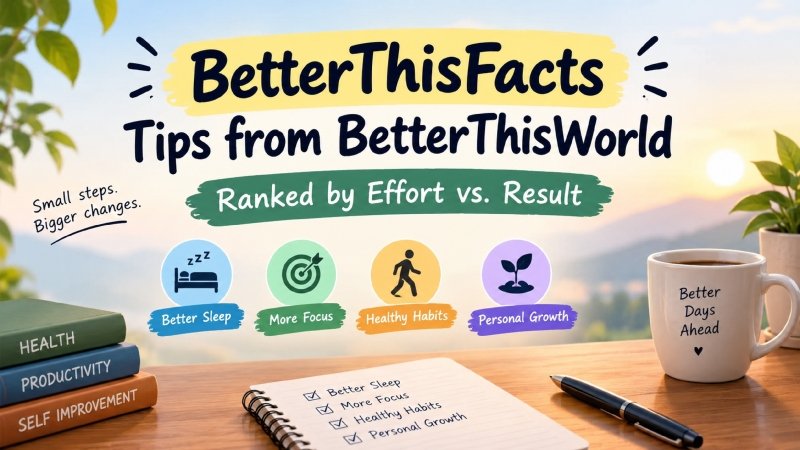
So here is a different way to read the BetterThisFacts tips from BetterThisWorld. Instead of treating every tip as equal, this list ranks them by one question: how much effort does it cost, and what do you get back? Each ranking leans on published research, not guesswork. Start at the top and stop whenever you feel stretched.
How This Ranking Works
Each tip is judged on two things. Effort is the daily time, energy, and friction it demands. Result is how strong the evidence is that it changes something real, like sleep, focus, or follow-through. The order runs from best return to worst.
Rank 1: The Five-Minute Bedtime List
Effort: very low. Result: high.
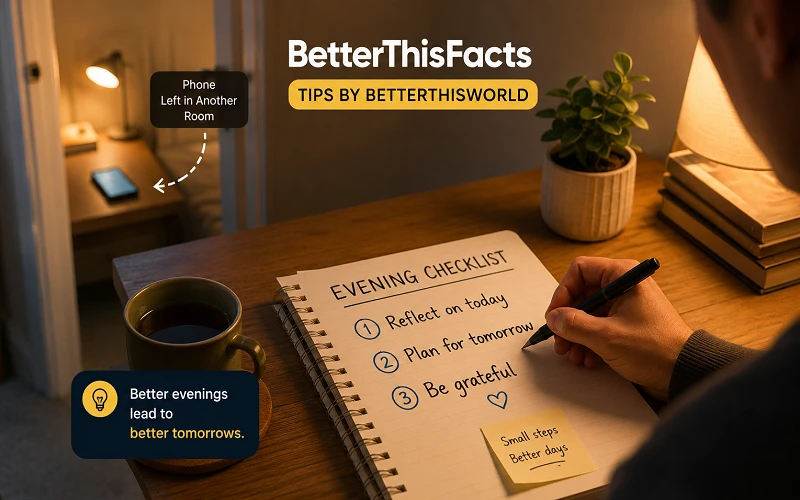
Before bed, write down everything you need to do tomorrow. In a 2018 sleep-lab study at Baylor University, people who wrote a specific to-do list fell asleep about nine minutes faster than those who wrote about tasks they had already finished. The more detailed the list, the faster they drifted off.
The real win is mental. Your brain stops rehearsing tomorrow’s problems because they now live on paper. It costs one pen and one page, which is why it tops the list.
Rank 2: The “If This, Then That” Plan
Effort: low. Result: high.
Vague goals like “exercise more” fail because they never say when or where. Researchers call the fix an implementation intention: “If it is 7 a.m. and my coffee is ready, then I will stretch for five minutes.” A 2006 review of 94 studies found that people who made these plans followed through on goals noticeably more often, with a medium-to-large effect.
You are not adding willpower. You are removing the daily decision. Attach one habit to a moment that already happens, and write the sentence down.
Rank 3: Walk Enough, Not Perfectly
Effort: medium. Result: high.
The famous 10,000 steps target began as a marketing slogan in Japan, not a scientific finding. A 2022 analysis in The Lancet Public Health, pooling 15 studies, found that benefits levelled off around 6,000 to 8,000 steps a day for adults over 60, and around 8,000 to 10,000 for younger adults.
You do not need a perfect number. You need to move more than you did last month. A ten-minute walk after lunch and another after dinner gets many people most of the way there.
Rank 4: A Boring, Steady Bedtime
Effort: medium. Result: medium to high.
Most sleep advice obsesses over hours. But a 2024 study of roughly 60,000 UK adults, published in the journal Sleep, found that irregular sleep timing predicted early death risk more strongly than sleep duration did. It is observational, so it shows a pattern, not proof of cause.
The tip is simple: sleep and wake within about the same hour every day, weekends included. It ranks fourth only because it fights your social life.
The Tips That Cost More Than They Return
The perfect 5 a.m. routine demands huge effort and works only if your body clock and responsibilities match it. For many people, it just trades sleep for guilt.
Tracking everything, from steps to mood to water, feels productive. But when tracking becomes a habit, the real habit never forms.
Waiting for motivation costs the most. Motivation is unreliable by nature, which is exactly why Ranks 1 and 2 run on a plan instead of a mood.
Your Starting Point This Week
Do not try all four. Choose one. If your nights are restless, start the bedtime list tonight. If good intentions keep disappearing, write one if-then sentence tomorrow morning. If you sit most of the day, add two short walks and check your energy by Friday.
Conclusion
The best tips from BetterThisWorld are not the hardest ones. They are the ones that give back the most for the least effort. A bedtime list, one if-then plan, a realistic walking habit, and a steady sleep schedule can change how your days feel without a total life overhaul.
Pick one tip, give it a few weeks, and add the next only when the first feels automatic. Small, ranked, and repeatable beats big, perfect, and abandoned every time.
Frequently Asked Questions
What are BetterThisFacts tips from BetterThisWorld?
They are practical tips on productivity, health, and personal growth. This article ranks them by effort versus result, so you know which ones deserve your time first.
Which tip should I start with?
The five-minute bedtime list. It costs almost nothing and has research showing it can help you fall asleep faster.
Do I really need 10,000 steps a day?
Not necessarily. Research suggests benefits level off between 6,000 and 10,000 steps depending on age. Moving more than you currently do is the real goal.
Can I try all four tips at once?
You can, but it usually backfires. Choose one, stay with it, and add the next only when it feels automatic.