Space news travels faster than the footnotes. A headline says a world was found. A clip says the universe “just changed.” Your feed treats both like a score alert.
A betterthiscosmos post betterthisworld should slow that down. It should keep the wonder and still name the limit.
This page is a reading method. It is not a telescope shopping list. It is not a market note. It is not a habit tracker or a tool eval. Those jobs already have articles.
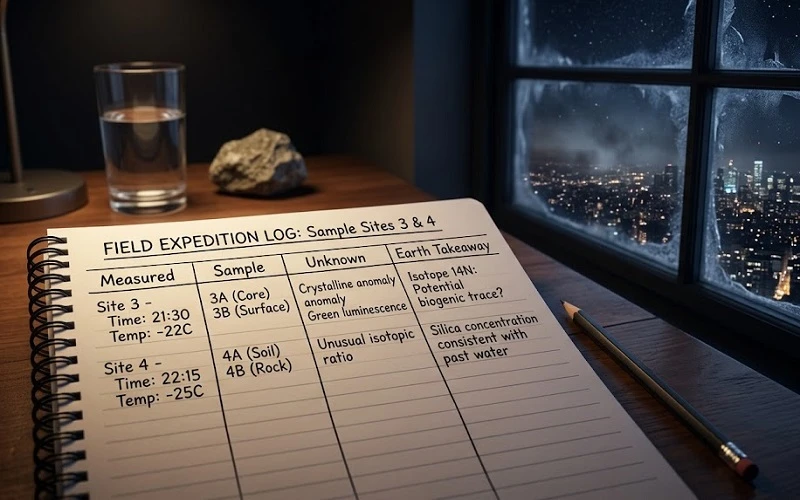
I read science posts the way I read a methods paragraph. What was measured? How big was the sample? What is still unknown? What, if anything, changes a street on Earth? If a post cannot stand those four questions, it is a poster.
What BetterThisCosmos posts by BetterThisWorld should be
Betterthiscosmos posts by betterthisworld work when they treat curiosity as a skill.
A good post does four things:
- Tells one discovery in plain words
- Names the instrument, survey, or paper type
- States a limit in one sentence
- Offers one human-scale takeaway — or admits there is none yet
A weak post does the opposite. It stacks adjectives. It hides the date. It leaps from a distant object to your diet, your money, or your fate.
Wonder is allowed. Magic thinking is not.
If you write or edit these posts, put the limit above the flourish. Readers remember the flourish. They need the limit.
The four-question read
Use this on every betterthiscosmos post betterthisworld item, including ones you like.
1. What did they actually measure?
Not “a new Earth.” A radius, a transit dip, a spectrum, a temperature map, a gravity wiggle. If you cannot name the measurement, you do not have the story yet.
2. How big is the sample or the distance?
One candidate is not a population. One lab bench is not a climate. One simulation is not the sky.
3. What is still unknown?
Error bars, other explanations, missing follow-up, a model that only works if a guess holds.
4. What local action follows?
Sometimes the honest answer is none. That is a valid ending. Sometimes the action is small: look up a launch window, check a heat map, cut a porch light, support open data.
Write the four answers in a note. If question 3 is empty, the post is selling certainty it did not earn.
Wonder is the point. Action is optional.
People burn out when every science story demands a lifestyle overhaul.
Split posts into two kinds.
Wonder-only. A deep-field image. A well-explained eclipse. A clean account of a rover’s week. You finish it smarter. You do not owe the internet a routine.
Wonder-plus. Earth observation that maps heat. Air-quality data. A satellite product you can open. A local dark-sky rule. Here a takeaway can exist without a sermon.
Do not force kind two onto kind one. “This galaxy means you should journal” is a category error.
Betterthiscosmos posts by betterthisworld stay trustworthy when they let some stories end at understanding.
A simple anatomy of a strong post
When you draft or judge a piece, use this spine:
- One-sentence discovery
- How the measurement works, in short words
- Who did it and when
- The limit
- Why a non-specialist should care, if they should
- One link to a primary page: mission blog, paper abstract, observatory note
Example spine, invented only as a template:
- Discovery: A spacecraft mapped heat on a city grid.
- Measurement: Infrared passes, night and day.
- Who/when: Named agency, dated release.
- Limit: The grid is coarse. It misses porch-level shade.
- Care: You can compare hot neighborhoods before you plan trees or a walk.
- Link: The actual map, not a reaction thread.
That template is more rankable than a cosmic pep talk because it matches how people search: they want the finding, then they want to know if it is solid.
Local takeaways that do not pretend you run NASA
Keep Earth-scale moves small and checkable.
- Before a heat wave, open a public heat or shade map if your city has one.
- For a launch or meteor shower, write the local time and the weather window. Set one alarm. Go outside for twenty minutes.
- If light pollution bothers you, test one fixture: shield it, warm the color, or turn it off after 11 p.m.
- When a climate or air story cites satellite data, look for the dataset name. No name, no share.
None of these require a new identity. They keep the cosmos post from floating away.
Skip supplements sold next to nebula photos. Skip “alignment” calendars that want a card payment. Skip ticker tips glued to a sunspot chart. That mix is how a science lane turns into a junk drawer.
How viral space posts usually cheat
They swap a candidate for a colony.
>They use “scientists stunned” instead of a name.
>They crop a figure and drop the axis labels.
>They treat a press release as a peer-reviewed end.
>They collapse ten years of follow-up into “yesterday.”
>They ask you to feel late if you do not share.
Your counter is slow and slightly uncool. You look for the paper or the mission page. You keep the date. You refuse the colony leap.
If you cannot find a primary link in two minutes, the item stays in your head as a rumor. It does not go on your site.
A month of three posts, not a feed
Do not build a daily cosmos habit that fights your sleep. Three posts a month is enough to stay sharp.
Post A: A measurement you can describe to a friend.
Post B: A limit-heavy piece. Practice saying “we do not know yet.”
Post C: One Earth-scale item with a map, a time, or a fixture you can change.
After Post C, write four lines:
- What was measured
- What was not
- Whether I acted
- Whether I would share it
That is a reading club for one person. It will beat a saved folder of 80 tabs.
Comparison: a post that ranks vs a post that burns
| Element | Rankable cosmos post | Burn-off post |
|---|---|---|
| Opening | The measurement | “Everything just changed” |
| Source | Named, dated, linked | “Researchers say” |
| Limit | On the page | Buried or missing |
| Takeaway | Optional and local | Moral lecture or product |
| Topic mix | Science stays science | Tickers, diets, conspiracies |
| Date | Visible | Evergreen fog |
Search systems reward the left column because users bounce from the right column. They came for a finding. They got a sermon.
How this lane stays unique next to the other articles
Facts page: everyday figures and citations.
Tips page: cues in a kitchen and a charger.
Money page: floors and debt.
Success page: artifacts at work.
Gaming page: lag and session caps.
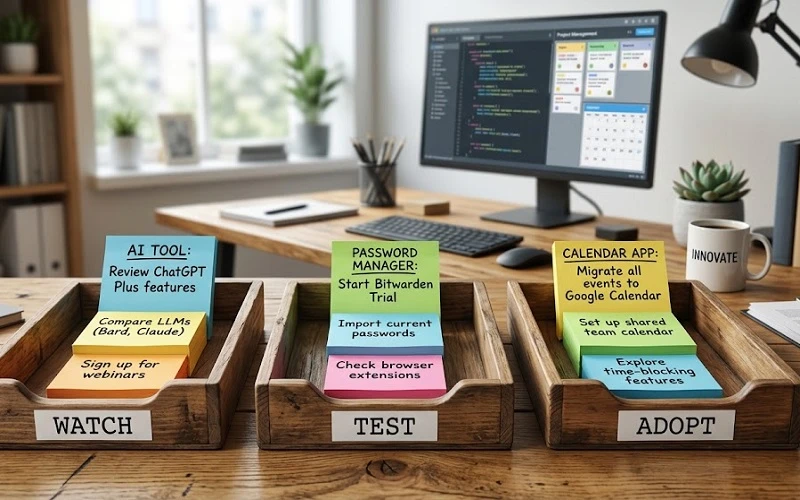
Tech page: Watch / Test / Adopt.
This page: measurement, sample, unknown, Earth takeaway.
Do not import password managers or index funds into a nebula post. Keep the sky on the sky.
If you later write btwletternews by betterthisworld website, let that letter pick one cosmos item a week at most. The letter can point here. It should not swallow this lane.
FAQ
What is a BetterThisCosmos post BetterThisWorld?
A short science or space explainer that names a measurement, a limit, and — only if it exists — a local takeaway.
Do I need a science degree to read these posts?
No. You need the four questions and the patience to ignore a stunned-scientist headline.
Should every post include something I can do?
No. Many discoveries end at a clearer picture. Action is a bonus, not a tax.
Can I use a cosmos post to time markets or health buys?
No. That is how this topic gets junk results. Keep money on the money page.
What source is good enough?
A mission page, an observatory log, a journal abstract, or a named agency brief. A quote card is not enough.
Conclusion
A betterthiscosmos post betterthisworld earns its place when it leaves you with a cleaner sentence: this was measured, this remains open, this is what I might do on the ground — or not.
Open one story this week. Answer the four questions. Share it only if question 3 is honest.
That is how betterthiscosmos posts by betterthisworld stay readable, unique, and easier to rank than another breathless clone of the same sky.